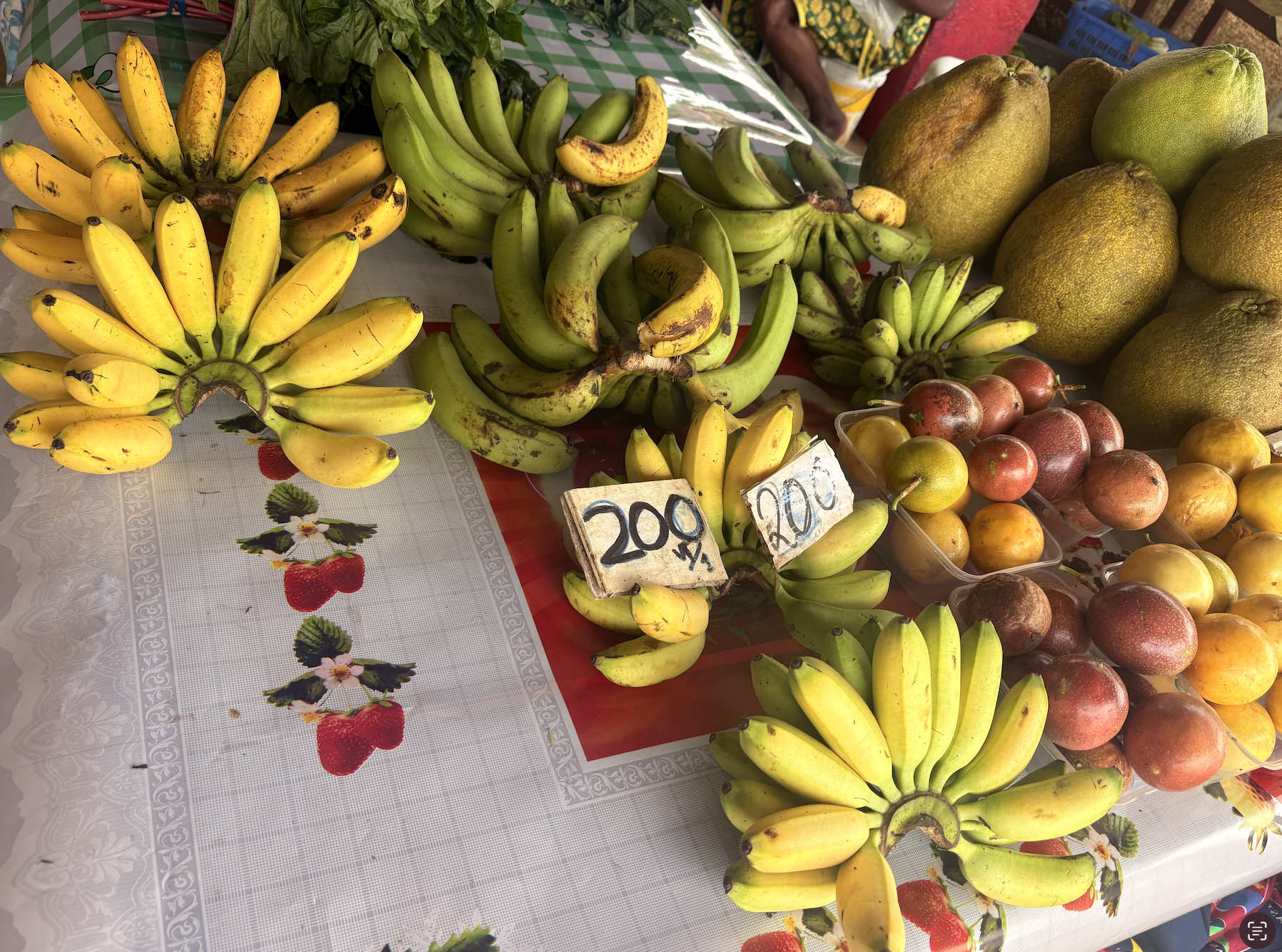
Mapping the Foodscape
Where food comes from and how people access it This section explores Port Vila’s food environment through markets, roadside vendors, supermarkets, restaurants, and community gardens.…
Read more
-
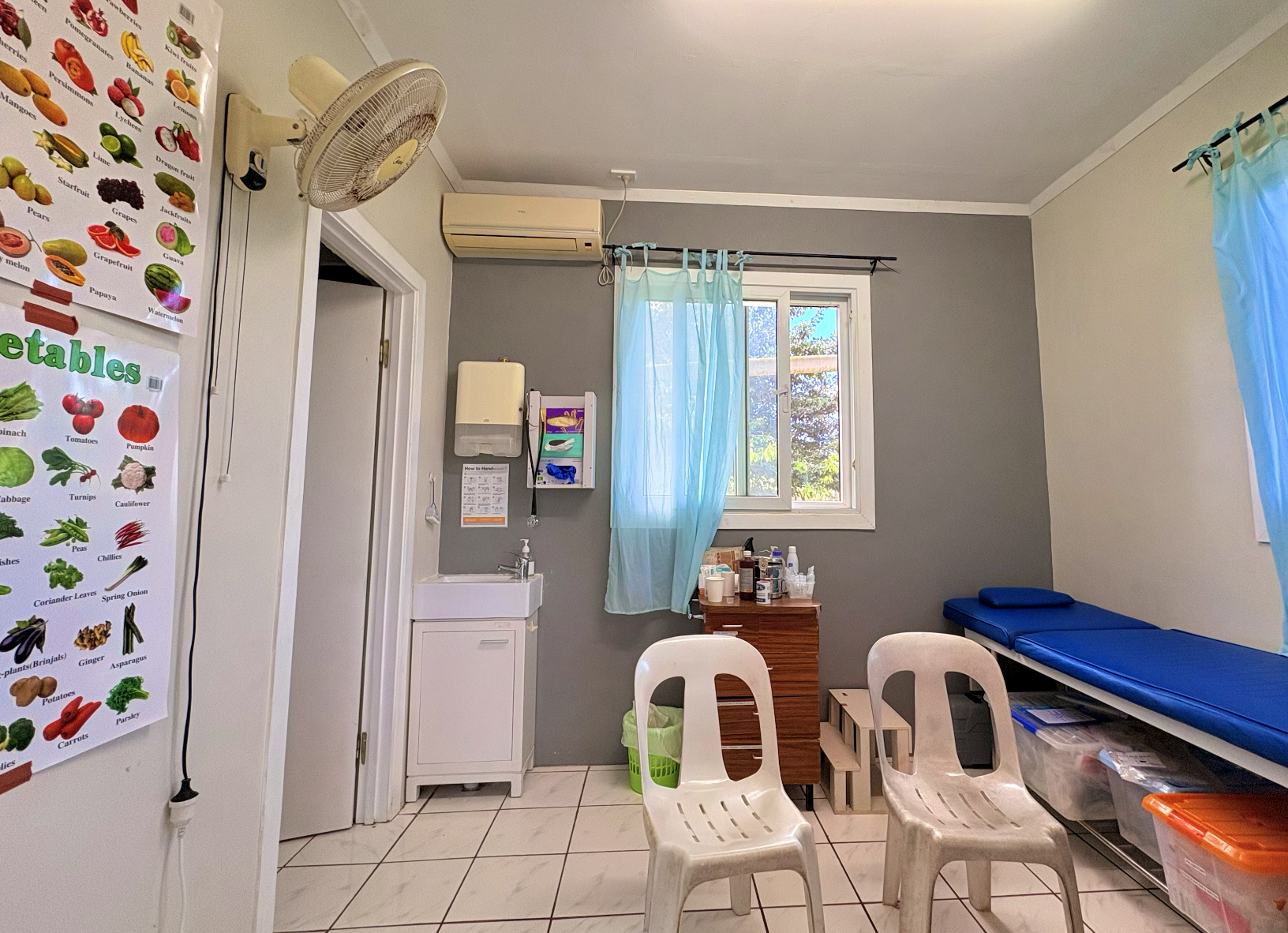
Health, Spirituality, and Nutrition
Read more: Health, Spirituality, and NutritionA Healthcare perspective on nutrition and spirituality This section examines how health practitioners and residents understand the relationship between food and health. It explores concerns…
-
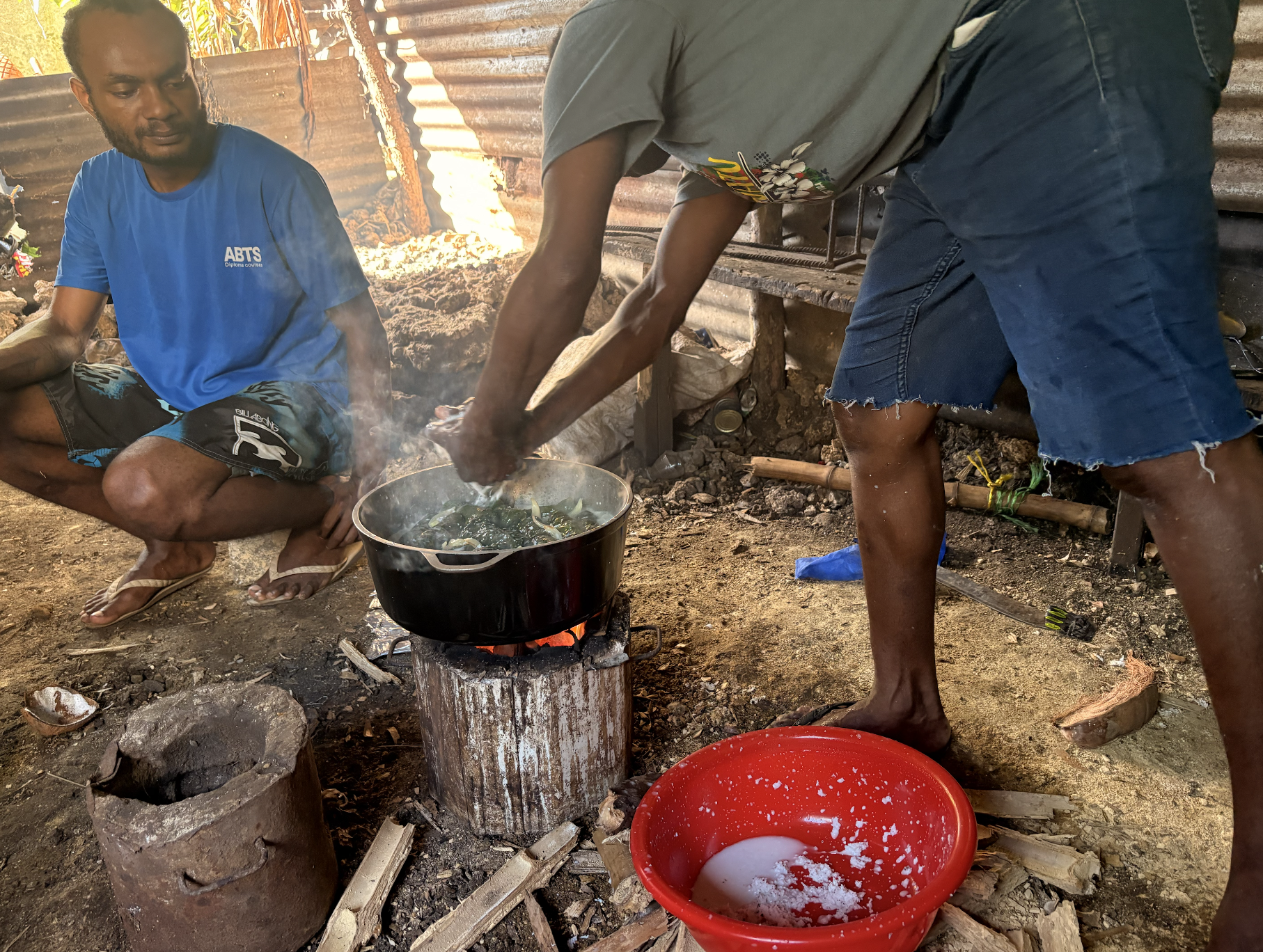
People, Homes, and Everyday Eating
Read more: People, Homes, and Everyday EatingSubtitle: Learning from households and daily life Food is more than nutrition—it is identity, family, memory, and community. This section focuses on conversations with residents…
-
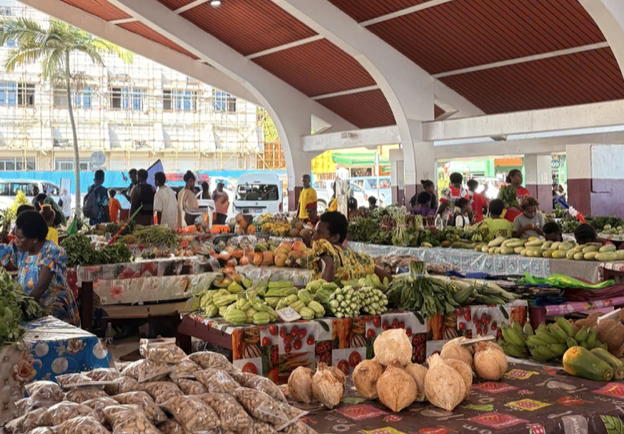
Inside Port Vila’s Central Market
Read more: Inside Port Vila’s Central MarketWork, food, and everyday life in the city’s busiest meeting place Possible content: 1. From Patron to Participant (your entry story) Purpose: establish your changing…
Writing Pillars
To understand what is happening to food in Port Vila today, you have to go back to the land.
In Vanuatu, land is the foundation of everything. It determines where you can grow food, where your family can live, and in a deeper sense, who you are. The concept of kastom, a Bislama term roughly translating to ‘custom’ or ‘tradition,’ holds this together. Kastom is the living body of indigenous knowledge, practice, and social order that organises Vanuatu’s hundreds of distinct communities: how land is inherited and shared, how food is grown and exchanged, how obligations between kin are met, and how a person earns belonging within a community. It is the system through which food has always been more than nutrition. Across Vanuatu’s islands, to grow food and share it was, and in many places still is, a fundamental act of social life. Kastom is the reason a yam sent from a rural island to a relative in Port Vila carries meaning that a bag of rice from a supermarket shelf cannot.
That relationship between land, kastom, and food was fractured by colonisation. Vanuatu was governed as the New Hebrides under the Anglo-French Condominium from 1906 until independence in 1980, one of the most unusual colonial arrangements in the Pacific, with British and French administrations operating in parallel and frequently in conflict. What both shared was an appetite for land. Large-scale land alienation by European settlers and commercial interests displaced ni-Vanuatu communities from productive agricultural land, particularly on Efate, the island on which Port Vila sits (Van Trease, 1987; de Burlo, 1989). Communities that had fed themselves through subsistence production tied to customary land were pushed into wage labour and dependence on purchased food long before anyone began formally tracking dietary change. The colonial economy introduced imported rice, canned goods, and sugar not as supplements to traditional diets but as the practical reality of dispossession. By the time Vanuatu gained independence in 1980, the dietary shift that researchers now call the nutrition transition had already begun.
Independence brought a constitutional guarantee that all land would revert to customary ownership, a deliberate and symbolic reversal of the colonial order. But as McDonnell (2016) documents, the political and legal complexities of land in post-independence Vanuatu have been far harder to resolve than the constitution anticipated. Competing customary claims, commercial development pressures, unclear boundaries, and weak regulatory frameworks have continued to shape who can access land and on what terms, particularly in and around Port Vila. The consequences for food are ongoing and direct. The peri-urban garden cleared for a housing development, the kastom arrangement between a migrant and a landowner replaced by a commercial lease, the fertile land on the urban fringe absorbed by informal settlement: these are the present-day expressions of a colonial disruption that was never fully repaired. Understanding food in Port Vila today means understanding that the forces reshaping what people eat are not new. They have roots.
Food is a way of expressing identity, belonging, tradition, and community.
Vanuatu is one of the most culturally diverse places on earth. Across 83 islands, over 100 distinct languages are spoken, and each island, and often each community within an island, carries its own kastom: its own ways of growing, preparing, sharing, and understanding food. What people eat, how they cook it, and who they eat it with are not incidental details. They are expressions of where a person comes from, who their family is, and what obligations they carry. A feast prepared for a community gathering on Tanna looks and means something different from one on Ambae or Paama. The ingredients, the methods, the social rules around who serves and who receives, all of this is inherited knowledge, passed down and actively maintained as a marker of identity.
Port Vila brings all of this together in one place. The city is home to migrants from islands across the entire archipelago, each carrying their own food traditions into an urban environment that is also full of imported rice, tinned fish, and supermarket shelves. When ni-Vanuatu meet someone new, one of the first questions asked is what island are you from. The answer tells you a great deal. It carries information about language, land, kastom, and by extension, food. Two people standing in the same Port Vila market may have grown up eating entirely different things, understanding food through entirely different cultural frameworks, even while living a few streets apart. The city does not erase that diversity. It layers it.
The food practices documented in this project reflect that layering. Across the people interviewed and the places visited, food keeps returning to questions of home, of island, of what was grown and cooked by parents and grandparents, and what has changed in the move to the city. These are personal stories, and they vary considerably. To hear directly from people about the food of their islands and what it means to them in Port Vila today, explore the stories collected here.
A city in transition: As populations grow, economies shift, and new foods become increasingly accessible, everyday eating practices are changing.
Port Vila has grown fast. What was a small colonial outpost of just a few thousand people in the mid-twentieth century is now home to over 50,000, with that number climbing steadily as people migrate from islands across the archipelago in search of work, education, and opportunity (Widmer, 2013). This internal migration is the most significant driver of the city’s growth, and it has transformed Port Vila into a place where dozens of distinct island communities, each with their own language, kastom, and food traditions, live alongside one another in close proximity. But the city also draws people from much further away. Australian, French, and New Zealand expats, Chinese and Vietnamese business owners, aid workers, retirees attracted by Vanuatu’s tax-free status and pace of life, and a growing number of seasonal visitors have all added new food cultures, imported products, and commercial food businesses to the urban landscape. The supermarkets, Chinese-owned trade stores, Vietnamese noodle shops, and Australian-style cafes that sit alongside local markets and roadside stalls are a direct reflection of who now lives in and moves through the city (Philibert, 1992; Lavender Forsyth and Atkinson, 2024).
Subsequently, urbanisation in Port Vila has brought with it a shift in how people relate to food at a structural level. In rural villages, food production, sharing, and consumption are embedded in kastom and kinship. In the city, land is scarce, time is compressed by wage labour and school schedules, and cash is necessary for almost everything. Imported rice, instant noodles, and tinned fish have become dietary staples because they are cheap, quick, and available everywhere. At the same time, the social infrastructure that once made traditional food practices sustainable, access to garden land, networks of reciprocal sharing, knowledge of cultivation passed between generations, is under increasing pressure in an urban setting (Widmer, 2013). The result is a food environment in transition, where old and new practices coexist uneasily and where what ends up on the table is shaped as much by economic constraint as by cultural preference.
Vanuatu is also a country that has been repeatedly forced to rebuild. Cyclone Pam in 2015, the Ambae volcanic eruption, COVID-19, and a succession of smaller disasters have tested the resilience of communities across the archipelago, and Port Vila has absorbed waves of displaced people in the aftermath of each. These events accelerate urbanisation and put additional pressure on food systems that are already stretched. They also reveal something important about the city: that alongside the supermarkets and trade stores, informal networks of mutual support, community gardens, church food distributions, and inter-island food transfers remain active and real. Port Vila is changing, but it is changing on top of foundations that have survived a great deal. To hear from ni-Vanuatu about how they have experienced these changes, and what food means to them in the city today, explore the stories collected here.
Food plays a central role in shaping individual and community health.
Add here
What does it mean when resilience is the word everyone reaches for?
When I arrived in Port Vila, I heard the word resilience constantly. Locals, expats, nurses, tourists, aid workers, everyone seemed to reach for it when describing ni-Vanuatu people and their relationship to hardship. Vanuatu is ranked as the world’s most at-risk country for natural disasters (Aleksandrova et al., 2021). It sits in one of the most active cyclone corridors on earth, its islands are volcanically unstable, and it contributes less than 0.001% of global greenhouse gas emissions while bearing a disproportionate share of climate-related damage. Cyclone Pam in 2015 destroyed an estimated 64% of the country’s GDP in a single event. The Ambae volcanic eruption displaced an entire island’s population. COVID-19 collapsed the tourism economy that a significant portion of Port Vila depends on for income. Against all of this, communities have rebuilt, gardens have been replanted, food has moved between islands through kinship networks, and people have kept going. That is not a small thing.
But resilience is rarely a neutral word, and the more I heard it used here, the more I started paying attention to what it was doing. Resilience is often celebrated without asking why certain groups repeatedly have to be resilient in the first place (Sims-Schouten, 2022). When it becomes the dominant frame for describing a community, it can shift responsibility away from structural failures and onto the people absorbing the consequences of those failures. After a cyclone, international agencies praise the resilience of affected communities, and that praise is often genuine. But it can also function as a kind of closure, a way of marking the end of a crisis without reckoning with what produced it or who is accountable for it. In a place like Vanuatu, where the hardships being endured are substantially caused by global systems that ni-Vanuatu people had no hand in creating, that closure matters.
This has direct consequences for food. Each major disaster has disrupted local food production, pushed more people into Port Vila, and deepened dependence on imported, purchased food. After Cyclone Pam, food aid consisting largely of white rice, tinned meat, and instant noodles was distributed across affected communities, directly contradicting Vanuatu’s own campaigns to promote local food consumption (Wentworth, 2020). In December 2024, a 7.3 magnitude earthquake struck near Port Vila, affecting approximately 80,000 people, destroying homes, and damaging infrastructure across Efate that the city is still recovering from today (HBDA, 2025). Each of these events accelerates the same pattern: people lose access to garden land, food production stalls, and the gap left behind gets filled by the market. The informal networks that buffer against that gap, community gardens, church food distributions, inter-island food transfers, are real and they carry a lot. But they are being asked to carry more each time.
The future of food in Port Vila is still being written.
add here